
If you own a solar energy system, you could be earning hundreds of extra dollars per year just for the clean electricity your panels produce. The secret? Solar Renewable Energy Certificates, commonly known as SRECs. This page explains exactly what SRECs are, how they work, which states offer them, and how you can start getting paid today.
What Is an SREC?
A Solar Renewable Energy Certificate (SREC) is a tradable, market-based instrument that represents the “clean energy value” of electricity generated by a solar panel system. For every 1 Megawatt-hour (MWh) – or 1,000 kilowatt-hours (kWh) – your solar system produces, one SREC is minted in your name.
Think of it this way: your solar panels produce two things – electricity (which powers your home or feeds the grid) and environmental attributes (the proof that clean energy was generated). SRECs represent those environmental attributes. They are separate from and in addition to the savings on your electric bill or any net metering credits you receive.
Why Do Solar Customers Get Paid for SRECs?
Many states have enacted Renewable Portfolio Standards (RPS) – laws that legally require utility companies to source a specific percentage of their electricity from renewable resources. Several of these states go further with a solar carve-out, mandating that a portion must specifically come from solar energy.
Rather than building all this solar capacity themselves, utilities purchase SRECs from homeowners and businesses as proof of compliance. If a utility fails to acquire enough SRECs, it must pay a steep penalty called a Solar Alternative Compliance Payment (SACP) – which can range from $50 to over $400 per MWh depending on the state.
This creates a competitive marketplace where you, the solar system owner, get paid for the clean energy your panels produce. The SACP acts as a price ceiling – utilities would rather buy your SRECs at market rate than pay the higher penalty.
Which States Have SREC Programs?
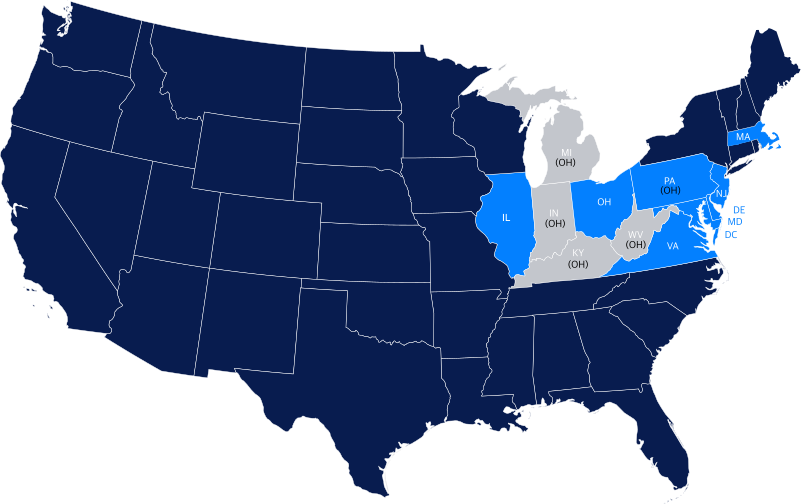
Not every state offers SRECs. Active SREC markets exist primarily in states with solar carve-outs within their Renewable Portfolio Standards. Here are the states and territories with active SREC or SREC-equivalent programs as of 2026:
- Washington D.C. – The most lucrative SREC market in the nation
- New Jersey – Legacy SRECs and the newer SREC-II (SuSI) program
- Maryland – Standard SRECs and Brighter Tomorrow (BT) SRECs
- Massachusetts – Legacy SREC-II (new systems enter the SMART program)
- Pennsylvania – Tier I Solar Alternative Energy Credits
- Virginia – Distributed Renewable Energy Certificates (DRECs)
- Ohio – Solar RECs under the state RPS
- Delaware – Solar carve-out under its RPS
- Illinois – Illinois Shines / Adjustable Block Program (fixed-price contracts)
SREC Market Map
The map below shows states with active SREC markets (highlighted). Light blue indicates states with their own solar carve-out and SREC market. Dark blue indicates states without their own SREC market but with areas eligible to participate in neighboring state markets. (Map source: SRECTrade / Xpansiv)
Current SREC Values by State (2026)
SREC values fluctuate based on supply and demand within each state’s market. Below are the current approximate market values as of 2026, sourced from the Flett Exchange and SRECTrade/Xpansiv. Remember: 1 SREC = 1 MWh = 1,000 kWh of solar production.
| State / Territory | SREC Value (per MWh) | SACP Ceiling | Notes |
|---|---|---|---|
| Washington D.C. | $360.00 | $440.00 | Highest-value market in the US |
| Massachusetts | $232.00 | $349.44 | Legacy SREC-II; new systems use SMART program |
| New Jersey (Legacy) | $175.00 | $239.00 | For systems registered before SuSI transition |
| New Jersey (SREC-II) | $76.50 | N/A (fixed) | Fixed incentive rate for newer residential systems |
| Maryland (BT SREC) | $55.00 | $60.00 | Brighter Tomorrow SRECs for newer systems |
| Maryland (Standard) | $40.00 | $45.00 | Standard SREC market |
| Pennsylvania | $22.50 | ~$45.00 | Tier I Solar Alternative Energy Credits |
| Virginia (DRECs) | $22.25 | Varies | Distributed Renewable Energy Certificates |
| Illinois | Fixed contract | N/A | 15-year block-based contracts via Illinois Shines |
| Ohio | $4.00 | ~$49.17 | Oversupplied market; lowest values nationally |
| Delaware | $15 – $25 | ~$50.00 | Small market, limited trading volume |
Conditions and Requirements for Earning SRECs
Not every solar installation automatically qualifies for SRECs. Your system must meet certain conditions to participate in the market:
| Requirement | Details |
|---|---|
| State Eligibility | Your solar system must be located in (or connected to a utility operating in) a state with an active SREC market and solar carve-out. |
| System Registration | The system must be formally registered and certified with the regional generation tracking system – such as PJM-GATS (Mid-Atlantic), NEPOOL-GIS (New England), or the equivalent state registry. |
| Revenue-Grade Metering | Most SREC markets require an ANSI C12-certified revenue-grade meter to accurately measure and report production. Inverter-estimated production is typically not accepted. |
| Grid Connection | The system must be grid-tied and interconnected with a participating utility. Off-grid systems generally do not qualify. |
| Automated Reporting | Monthly energy production data must be reported to the tracking system, either manually or through automated API reporting via your aggregator. |
| System Size | SREC programs may tier pricing or eligibility based on system size (e.g., residential under 25 kW vs. commercial over 1 MW). Most residential systems qualify. |
| SREC Lifespan | SRECs have a limited useful life (typically 3-5 years depending on the state) and must be sold before they expire. |
| Ownership Structure | The solar system owner is typically the one entitled to SRECs. With leases or PPAs, the SREC rights may belong to the leasing company – check your agreement carefully. |
How to Start Earning SRECs From Your Solar System
The easiest way to start earning SRECs is to work with an SREC aggregator who handles all the paperwork, registration, tracking, and trading on your behalf. One platform we recommend is RECmint – they make the entire process painless with automated energy reporting, competitive pricing, and direct deposit payments.
Getting Started With RECmint Is Simple
- Sign Up – Answer a few basic questions about your solar system
- Complete Paperwork – Sign the digital forms authorizing RECmint to act on your behalf
- System Details – Provide your system specs (often coordinated with your installer)
- Connect Your Inverter – RECmint integrates via API with Enphase, SolarEdge, Tesla, SMA, and other major inverters for automated energy reporting
- Link Your Bank – Set up direct deposit for payments
- Choose Your Contract – Sell at spot market rates, lock in a multi-year annuity, or explore other options
Most homeowners receive their first SREC payment within 6-12 weeks of registration.
Frequently Asked Questions About SRECs
Are SRECs the same as net metering credits?
No. Net metering credits compensate you for excess electricity you send back to the grid. SRECs are a separate income stream based on the clean energy attributes of your total solar production. You can earn both simultaneously.
Do I have to pay taxes on SREC income?
SREC income is generally considered taxable income by the IRS. Consult your tax advisor to understand how SREC earnings apply to your specific tax situation.
What if I lease my solar panels?
If you lease your system or have a Power Purchase Agreement (PPA), the SREC rights typically belong to the leasing company – not you. This is one of the key financial advantages of owning your solar system outright. Review your agreement carefully.
Can I sell SRECs if I have a solar loan?
Yes! If you financed your solar system with a loan, you still own the system and all SRECs it produces. This is a major advantage of purchasing (even with financing) over leasing.
How long will SRECs be available?
SREC programs are driven by state legislation and RPS targets, which typically extend 10-20+ years into the future. However, markets evolve – some states are transitioning from open markets to fixed-rate incentive programs. Registering your system sooner rather than later ensures you lock in eligibility under current rules.
Ready to Monetize Your Solar Investment?
If you have a solar system in an eligible state, you could be leaving money on the table. SRECs are one of the most overlooked financial benefits of solar ownership. Don’t miss out on this additional income stream.
Have questions about SRECs or need help with your solar system? Contact Solar Yoda – we’re here to help Maryland and Mid-Atlantic solar customers maximize their investment.
Sources: Flett Exchange | SRECTrade/Xpansiv | US EPA | DSIRE. SREC prices fluctuate – values shown are approximate as of 2026.